Usage of the Statue
Petrifies those who meet his gaze
Size
52X40x43
Stone
Carrara Marble
Project Category
Characters

Medusa
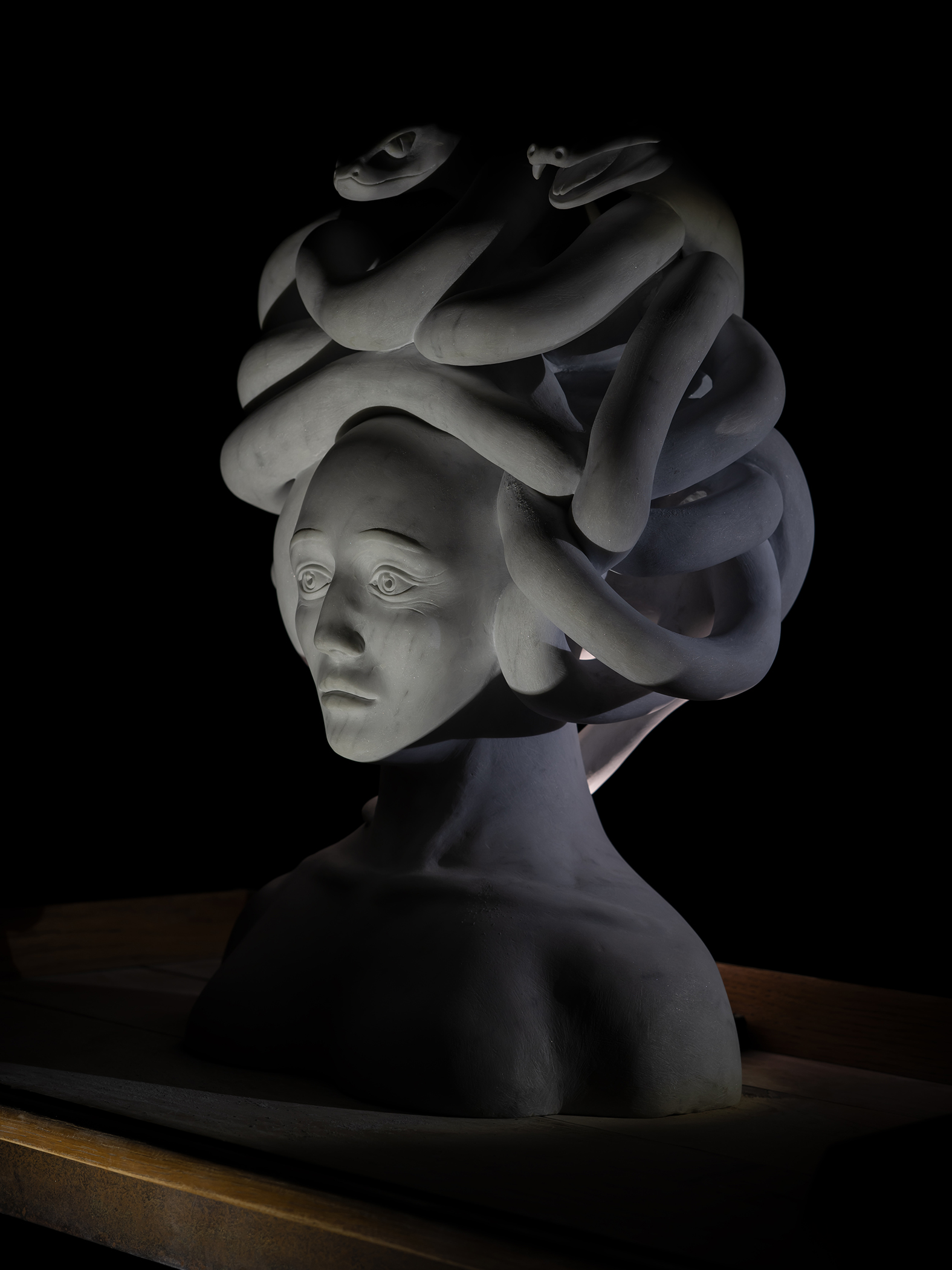
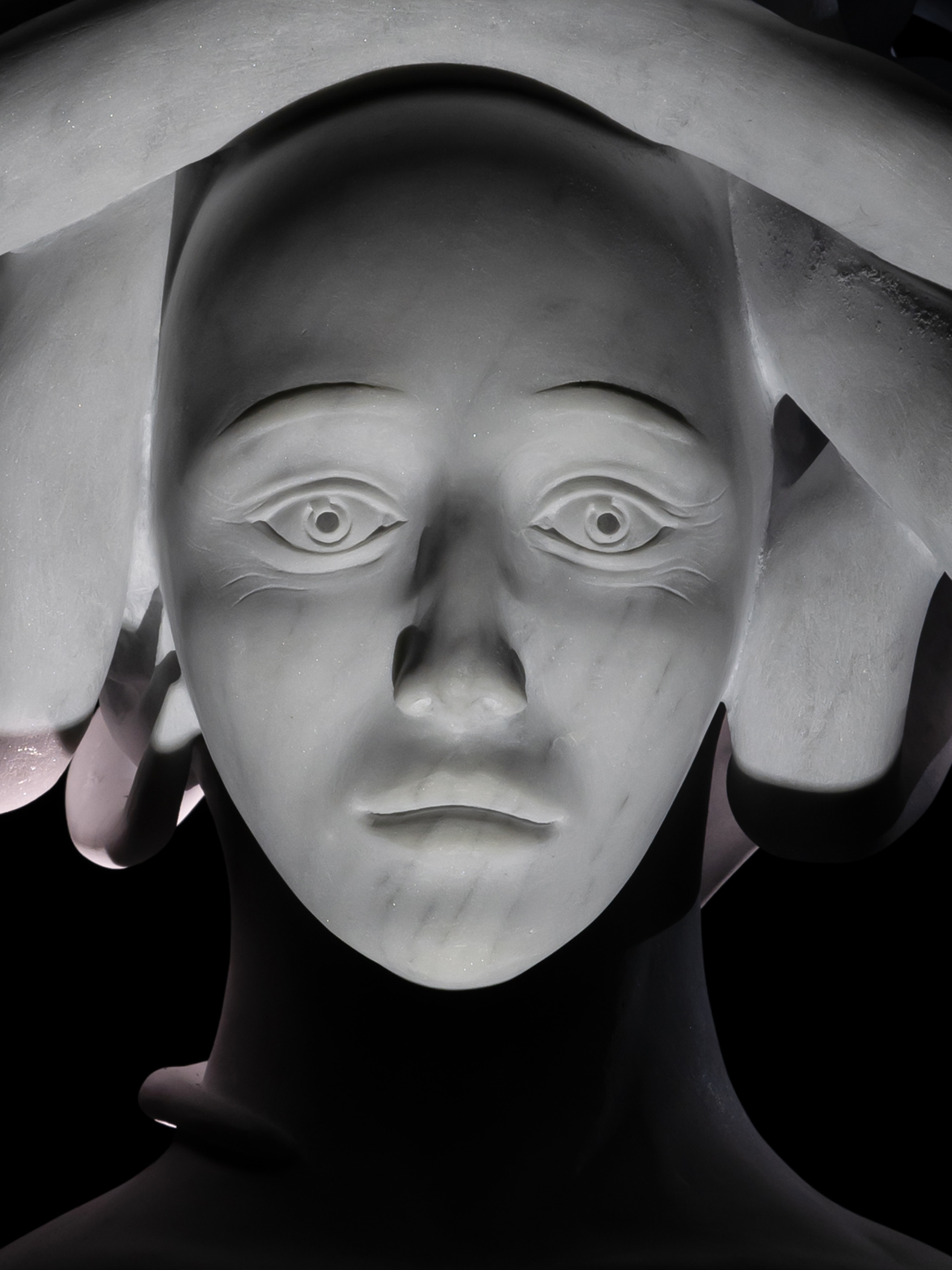
In the silence of marble, Medusa remembers. Before the monster, there was a face. Before the curse, a woman. Carved from the pale light of Carrara marble, this bust captures a suspended moment, one in which the myth ceases to cry out and begins to whisper. The gaze, once capable of turning flesh to stone, no longer strikes; it lingers—grave, inward—inhabited by an ancient memory. It does not challenge the viewer, but invites them to draw closer without fear. The serpents, frozen in their slow embrace, are no longer a threat but a presence. They form around the face a living crown, at once protection and burden, a symbol of an imposed metamorphosis. Their silent entanglement evokes time, divine punishment, and the blurred boundary between chastisement and power. Here, Medusa is neither scream nor fury. She is waiting. Between lost beauty and the fear she once inspired, between shattered innocence and dreaded icon. The softness of the stone contrasts with the violence of the myth, revealing a figure both vulnerable and contemplative, in which monstrosity seems to have withdrawn, leaving behind a persistent humanity. This bust proposes a reversal of the gaze. No longer is it a matter of confronting the Gorgon, but of holding her face. The myth falls silent; the stone speaks. And in this sovereign stillness, Medusa ceases to be merely a symbol of terror and becomes a figure of fate, transformation, and memory.
Dans le silence du marbre, Médusa se souvient. Avant le monstre, il y eut un visage. Avant la malédiction, une femme. Taillé dans la lumière pâle du marbre de Carrare, ce buste retient un instant suspendu, celui où le mythe cesse de crier pour murmurer. Le regard, autrefois capable de pétrifier, ne frappe plus : il demeure, grave et intérieur, comme habité par une mémoire ancienne. Il ne défie pas le spectateur, il l’appelle à s’approcher sans crainte. Les serpents, figés dans leur lente étreinte, ne sont plus menace mais présence. Ils dessinent autour du visage une couronne mouvante, à la fois protection et fardeau, symbole d’une métamorphose imposée. Leur entrelacement silencieux évoque le temps, la punition divine et la frontière trouble entre châtiment et pouvoir. Ici, Médusa n’est ni cri ni fureur. Elle est attente. Entre la beauté perdue et la peur qu’elle inspira, entre l’innocence brisée et l’icône redoutée. La douceur de la pierre contraste avec la violence du récit mythologique, révélant une figure vulnérable, presque méditative, où la monstruosité semble s’être retirée au profit d’une humanité persistante. Ce buste propose un renversement du regard. Il ne s’agit plus d’affronter la Gorgone, mais de soutenir son visage. Le mythe se tait, la pierre parle. Et dans cette immobilité souveraine, Médusa cesse d’être seulement un symbole de terreur pour devenir une figure du destin, de la transformation et de la mémoire.
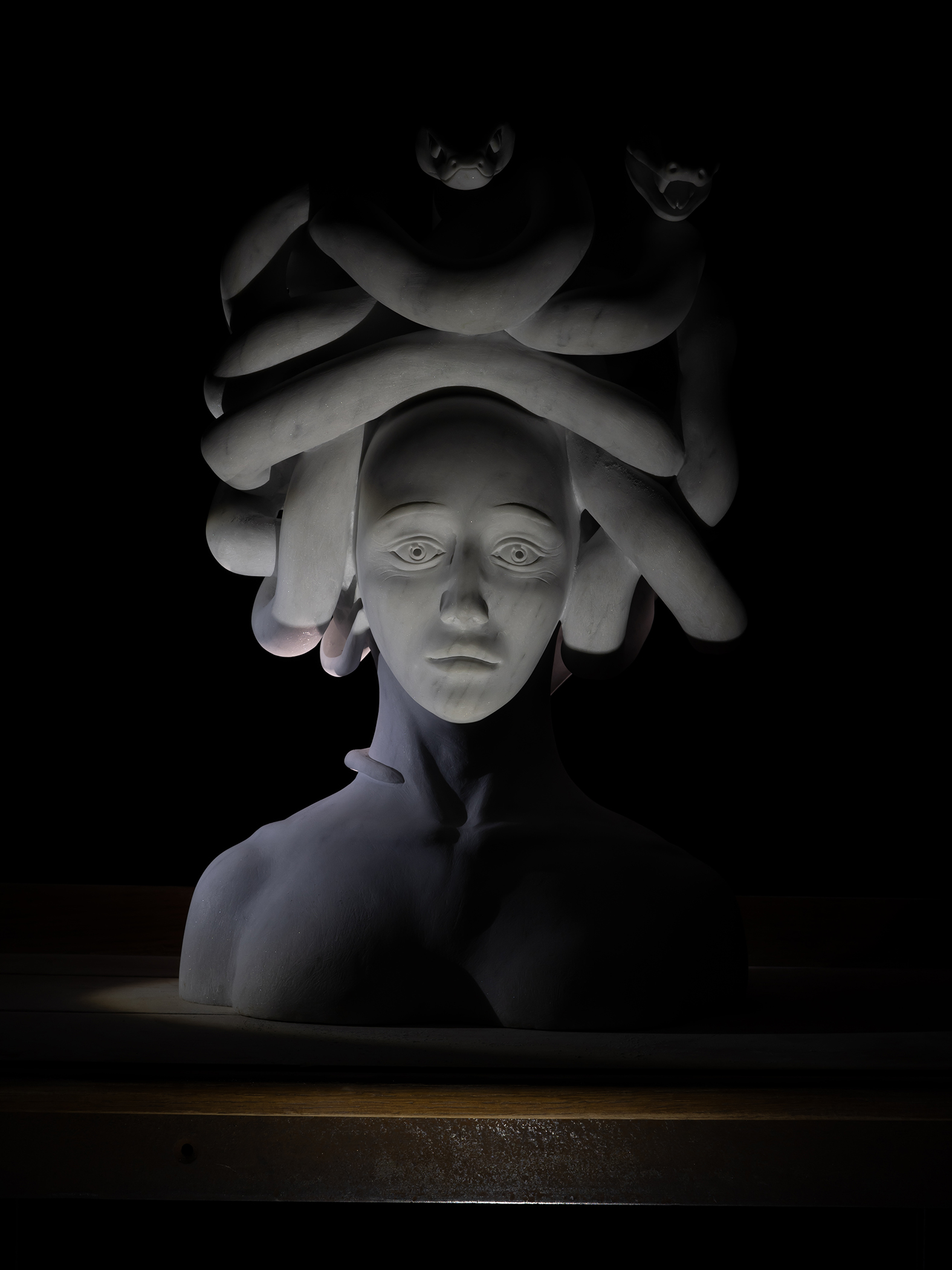
MEDUSA
Celle qui pétrifie celui qui croise son regard